Pages

.

Showing posts with label training. Show all posts

Business Analyst Training Chennai (Bhargavi Adaptive)

Business analysis is a critical process that drives the project life cycle. The business analyst, acting as an intermediary between the business and technical communities, analyzes competing business needs and develops plans to implement the projects that support stakeholder objectives. In this course, you gain foundational knowledge of the role and function of the business analyst. You also learn to apply a clearly defined business analysis framework.
Course Highlights and Key Take Away
* 100% success rate for CBAP and CCBA certification past record
* Question Bank with 450 IIBA model questions for all participants
* Adaptive Processes Consulting (www.adaptiveprocesses.com) is an Endorsed Education Provider of IIBA, see the listing here http://tinyurl.com/IIBA-Adaptive-EEP
* Complimentary e-learning on Business Analysis skills based on BABOK to all participants
* Pre class reading material on BA tools to all participants
* Hard copy Course material to all participants based on BABOK 2.0
* CBAP/CCBA Preparation help and guidance by experienced CBAP certified faculty
* Case study based approach
* Complimentary business analysis toolkit for all participants for the session
* We cover all essential BA tools and techniques like UML, BPM, Test Automation Tools, Requirement Elicitation
* IIBA Endorsed program - You get 21 contact hours for CBAP/CCBA certification by IIBA
* Faculty with more than decade long experience in business analysis and software project management, product development experience - Faculty is CBAP and an industry expert with lot of subject matter experience and is well known in the industry
* Excellent participant feedback (http:// tinyurl.com/Linkedin-BA-feedback, http:// tinyurl.com/BA-feedback,http://www.adaptiveprocesses.com/Training-Feedback.html)
* Complimentary CBAP model questions for all participants
* The course also prepare the candidates for the CBAP certification with Mock test and preparation with sample questions.
* We provide sample templates, policies and artifacts from our tool kit which helps people in implementation of the concepts in their job.
* The program covers BA tools and techniques like UML, BPM, Requirements elicitation, Stakeholder Management, Solution Assessment and Elicitation Techniques etc.
* Certified PMP? recipients can claim 21 PDUs for their CDU requirements by attending this workshop.
Target Audience: Business Analysts, Software Analysts, Functional Analysts, Market Analyst, Project Managers, Software Architects, Senior Programmers, Transition Analysts, Transition Managers, Transition Leads.

Course Content:
Day 1, Day2 and Day 3:
* e-learning on BA Concepts based on BABOK 2.0
* BA tools learning based on pre class study material on BA tools
Day 4:
* Participant and faculty introduction
* Introduction to business analysis
* Business Analyst responsibilities and skills
* Analytical thinking and problem solving
* Exercise on problem solving Communication skill
* Negotiation Skills
* Business Analysis Process

* Exercise on negotiation skills
* Managing Business Change
* Discussion on BA tools
* Business analysis process
* Stakeholder Management
* Case study on stakeholder management
Day 5:
* Remaining parts of business analysis process
* Exercise on BA planning
* Enterprise Analysis
* Process mapping tools
* Process mapping exercise
* Remaining parts of enterprise analysis
* Elicitation Techniques
* Requirements analysis
* Solution assessment
* Requirements management
* Exercise on Elicitation Techniques
* Exercise on requirements analysis
* Requirements management
* Solution assessment
Day 6:
* IT System Modeling
* Use case modeling
* Testing Principles
* Test automation tools
* Case study on development of test cases
* CBAP preparation tips
* CBAP mock test and answer discussion
* Question and answers
* Feedback and closure
Faculty Profile:
* Senior Consultant and Trainer
* CBAP from IIBA, Canada
* Worked as business analyst with Cap Gemini, Sigma Software and IndoGlobal
* Proven expertise in Business analysis activities for projects in Finance (Wealth Management), Telecom (Voice, Video, Data Service Provisioning and Activation), Process Automation, and Life Sciences domains.
* Business Analysis consultant to various clients and projects helping them choose right business analysis approach.
* Conducted multiple public and in-house workshops conducted in the areas of Business analysis and Requirements Analysis with excellent participant feedback.
* 7+ years of industry experience in software development and business analysis
* Post Graduate Diploma in Marketing Management, Marketing
* Bachelor in Engineering in Information Technology, University of Pune
Course Designer Profile:
CBAP, PMP, CSM, Six Sigma Black Belt, Certified ISO 9001, ISO 20000 and 27001 Lead Auditor, CSQA (World Topper for the year 2000), PGDM (IIMA) and BE.

18+ years of professional experience in business analysis, project management, product development and consulting. He has consulted several large clients in US, Europe and India for IBM, Infosys, PWC, iGate, MACH, Ness Technologies, AXA Group Solutions etc. He has played role of business analyst for multiple projects in implementing large ERPs and developing software products.

All our Faculties come with more than decade long experience in business analysis, software project management and product development experience.

All the faculties are CBAP certified professional.

Program Feedback:
Please find the earlier program feedback under the following link:
http://tinyurl.com/Linkedin-BA-feedback
http://tinyurl.com/BA-feedback
http://www.adaptiveprocesses.com/Training-Feedback.html

BA workshop FAQ:

http://www.adaptiveprocesses.com/faq/BusinessAnalystTrainingFAQ.pdf
Registration/Clarifications:
Please contact:
Ananya M:+91 9343794800/9019450325

Processing ...
reade more... Résuméabuiyad

Benefits from training is tremendous (Safi Qudsi)

It is a well-known and popular subject - training. There are career build in training. People want to become trainers and train others in a particular subject. There are programs which help individuals to become qualified and well experienced trainers. The subject training is vast and has different roles that one can play with it. One of the other best parts is getting trained in a particular subject and excelling in it. This proves to be advantageous for the candidate who has opted to get trained. It opens new door and opportunities for him or her.

Expediting services are one of the most important things when it comes to purchasing or project management. Especially when it comes to large scale projects like constructing of refineries or power plants these services come into play. People having training in expediting services is considered over others. These people make sure that the goods supplied to erect the project are of quality, delivered on time, make sure that there is no extra cost, minimize potential risk and make sure that the client is happy with the work done for them.

Companies who are into constructions use this service. This service makes sure that the clients are happy and the project completes successfully with no loss of materials, life or any kind of eventuality. The training in expediting services makes the specialist work as per guidelines and he or she knows what to check for in the material supplied and how to bargain and get a cost which is beneficial for the company and the supplier.

Any kind of training makes sure that the person is extremely well versed in the subject, is confident to handle any situation and to take the best decision for the company that he or she work for. The skill imparted during training is a boon to the individual and he or she will have it as an asset for the lifetime. No one can take it away from them and they can catch on it extremely well. Going by the books is good but having a practical insight is an added advantage. Training comprises of both. One gets bookish knowledge as well as practical experience in doing a particular thing. Professional training is very in depth and needs lot of time and patience to finish it properly with good score. If a company is giving the training then they will definitely see how you have fared in the training based on which you might get promoted or go to the next level without any hitches.


All of us can benefit from training and we should take it up enthusiastically. At the same time the trainers should make sure that the training sessions are not boring and it should involve all the students and the class should be vibrant with exchange of ideas and making sure that each and everyone in the room has understood the subject well and there is no scope of any confusion. All of this can be done by a qualified and experienced instructor. It is not easy to train experienced individuals who have worked in different companies and are still working. Getting them on the same level and making them go through the strenuous basic ritual with no complaints is not an easy job. And only and experienced trainer can do it and get the best out of his or her students. To sum it up, in a strong note, we can say that training is one of the important things in life and one should never ignore it and enjoy its benefits.

To get more details on the same call us At (281-804-8632) or log on to our website http://www.aqss-usa.com/expediting-services.asp

AQSS is a Houston based company, with a team of highly experienced and certified/qualified auditors Learn more at Expediting Services
reade more... Résuméabuiyad

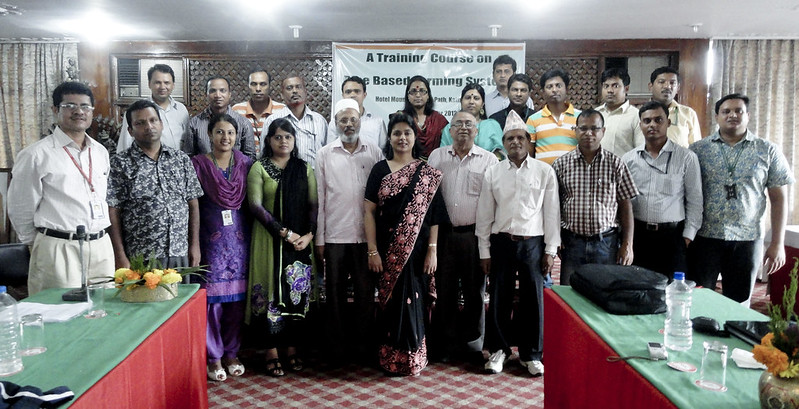
Nepal: Training on rice-based farming systems held in Kathmandu


Twenty IRRI staff attended Rice-based farming systems, a 5-day (10-14 September 2012) training program held in Kathmandu. The program sought to familiarize participants with rice-based farming under different ecosystems in Nepal and Bangladesh. Rice, the staple food of the Nepalese people, is grown in various physiographic conditions, from the terai (plains) to areas of about 3,000 feet above sea level.

Resource persons presented papers on the characterization and analysis of past and current farming in different ecosystems (terai or plains, low hills, mid-hills, and high hills).

Topics presented also included production management, mechanization, and postharvest technologies in rice-maize, rice-wheat, rice-vegetables, rice-livestock, rice-poultry, and rice-fish systems. Problems, constraints, and opportunities in each of these systems were elaborated. Cross-cutting issues on rice-based farming systems between the two countries were hot topics in the discussions.

The participants were also taken on a tour of the research stations of the Nepal Agricultural Research Council in Kathmandu that showcased technologies as applied in rice, maize, vegetable, and pulse, particularly in the mid-hills. They also learned about trout-farming at Kakni, in Nuwakot District.

The training was organized by the Cereal Systems Initiative for South Asia and IRRI-Nepal. 


Learn more about IRRI (www.irri.org) or follow us on the social media and networks (all links down the right column).
reade more... Résuméabuiyad

Training on mass metrology held for IRRI staff

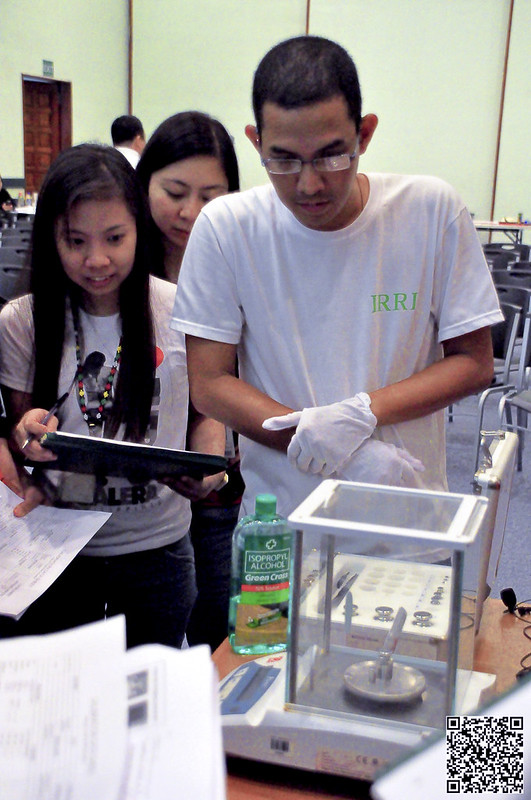
A training-workshop, Technical requirements for calibration and measurement traceability of weighing instruments and meter sticks, was held at IRRI on 12 September 2012 to enhance accuracy and traceability of data collected using the weighing balance and the meter stick.

The workshop was held in two parts: a lecture on technical calibration requirements and traceability, and a hands-on session on calibration of electronic weighing balances and meter sticks. It was attended by 55 staff from IRRI's various laboratories.

Proper calibration of weighing instruments will ensure that measurement data are accurate and traceable to international weight standards. Previous calibration workshops were held in December 2010 and July 2011.

Resource for the workshop was Roxan de Luna Roxas, quality and technical manager of Metrologie Concepts Solutions, Inc. in the Philippines.

The workshop was organized by IRRI's Risk Management Quality Assurance unit.


Learn more about IRRI (www.irri.org) or follow us on the social media and networks (all links down the right column).
reade more... Résuméabuiyad

South Korea: Training held on rice technology transfer systems


The two-week training course on rice technology transfer systems in Asia was held on 30 July-10 August 2012 at the International Technology Cooperation Center of the Rural Development Administration (RDA) in Suwon, South Korea.

The course was attended by 15 participants from Bangladesh, Cambodia, Indonesia, Lao-PDR, Nepal, the Philippines, South Korea, Sri Lanka, Thailand, and Vietnam and is on its twelfth offering. It has now  trained more than 160 middle-level research and extension officials from 18 countries.

The course was jointly sponsored by RDA and IRRI and aims to (1) show an example of a systematic technology transfer mechanism linking multiple stakeholders; (2) provide participants from Asian countries exposure to different models of technology transfer in rice and analyze components of successful research-extension linkages; (3) explore contemporary issues in the maintenance of effective technology transfer processes; (4) prepare participants to emulate selected models and experience rice technology transfer; and (5) create awareness of Korean development programs in each of the participant countries.

Resource persons were Noel Magor, David Shires, and Achu Arboleda from the IRRI Training Center and Kim Jung Gon, Young-Chan-Cho, Hyundong Lee, and Je-Kyu Kim from RDA.


Learn more about IRRI (www.irri.org) or follow us on the social media and networks (all links down the right column).
reade more... Résuméabuiyad

Rice breeding course ongoing in IRRI


Twenty-one participants from 10 countries came to IRRI to attend the annual Rice Breeding Course, one of IRRI's most popular training courses, on 1-16 August 2012.

Topics covered in the course include fundamentals of rice breeding (theory and practice), screening for biotic and abiotic stresses, experimental design and data analysis, and DNA marker-assisted selection. Attending the course is also an opportunity for participants to see methods currently used in IRRI's various breeding programs and learn about recent developments in rice science.

Participants were from PhilRice; the IRRI offices in Tanzania, Burundi, and India; and Meghalaya State in Northeast India. Those from Meghalaya will become the state’s first rice breeders and will be in IRRI until mid-September to undertake more rice breeding training.


Learn more about IRRI (www.irri.org) or follow us on the social media and networks (all links down the right column).
reade more... Résuméabuiyad

Bangladesh: CSISA holds training workshop on rice technology adoption


A training workshop on rice-based cropping systems and adoption of rice production technology was held in Khulna for rice-related service providers.

The workshop was organized by the Cereal Systems Initiative for South Asia in Bangladesh (CSISA-BD), with the assistance of the Directorate of Agricultural Extension (DAE), and was held on the CSISA-IRRI Khulna Hub premises on 19 July 2012.

Eighteen local service providers from remote areas in 6 upazilas in Khulna, Satkhira, and Bagerhat districts attended as participants. The service they provide include supplying seeds of new high-yielding, salt-tolerant, and other rice varieties, and of other crops; fertilizers; pest and disease management; irrigation; and crop management.

Participants learned to identify information needs of farmers against the type of information provided by them and the technological packages recommended by the NARES and CSISA-BD project for the area. They determined the gap between what is available and what is sought, and discussed ways to overcome this gap.

M.A. Aziz, DAE deputy director in Khulna District, encouraged the participants to provide services appropriate to a community and emphasized the judicious application of fertilizer and other farm inputs.
reade more... Résuméabuiyad

Timor-Leste: IRRI holds report-writing and presentation skills training course

The first batch of participants in the Report Writing and
Presentation Skills Course
held in Timor-Leste.
Second batch
Sixty-eight participants from the Seeds of Life program of Timor-Leste's Ministry of Agriculture and Fisheries (MAF) attended the Report Writing and Presentation Skills Course held in Dili on 26 June-13 July 2012.

The course was offered in three batches to accommodate the number of participants, who were a mix of researchers, extension workers, and administrative personnel. It aimed to help participants write reports more effectively, develop confidence in articulating and sharing their ideas about their work and research, and deliver effective presentations.

Third batch
Topics included report writing, preparing visuals, and presentation, conducted through lectures and hands-on exercises.

Achu Arboleda and Lanie Quinto, both of the IRRI Training Center, conducted and facilitated the course, respectively.
reade more... Résuméabuiyad

IRRI holds training on presentation skills for local staff

IRRI's Human Resource Services (HRS), in partnership with Guthrie-Jensen Philippines, held the Effective Presentation Skills (EPS) training for the second time on 17-19 July 2012 at IRRI headquarters.

Eleven HQ-based nationally recruited staff attended the 3-day workshop facilitated by Ralph Guzman, managing consultant at Guthrie-Jensen.

EPS is an 11-module program that aims to develop and hone the presentation skills of participants. This interactive training continues to receive positive participant feedback since it was held for the first time in 2011.

For inquiries or reservations on upcoming learning and development programs, please contact HRS's Annabelle Aquino (a.aquino@irri.org or IRRI extension 2824).

reade more... Résuméabuiyad

Philippines: Season-long rice farming training program starts for African agronomists


An 18-week season-long rice farming training program for extension agronomists from African countries commenced at the Philippine Rice Research Institute (PhilRice) in Nueva Ecija, Philippines, on 25 June 2012.

The program, now in its second offering, has 26 participants from 6 countries: Burundi, Ethiopia, Ghana, Nigeria, the Philippines, and Sierra Leone. It is a joint undertaking between the Government of Japan, through its Japan International Cooperation Agency (JICA), and IRRI and runs from 25 June to 26 October 2012.

It will contribute to a greater and sustainable harvest of quality rice in each country and will demonstrate that the application of up-to-date rice farming practices and farm mechanization will result in increased food security and improvement in the livelihoods of rice farmers and their families and communities.

The program introduces a model of effective extension by a team of extension agronomists that are supported by researchers and research technicians that effectively incorporate the latest crop management technologies into farm practices. Extension agronomists are skilled in technology transfer to farmers.
               
The course includes participatory technology demonstration and the farmers' field school, conducted in partnership with Philippine farmers.

Also within the program, IRRI will hold meetings in collaboration with the participating organizations in Africa and follow up on participants’ implementation of a small project applying knowledge and skills acquired from the training in their own country. 

The course is led by Noel Magor, IRRI Program 6 leader and Training Center head; Joseph Rickman, East and Southern Africa program coordinator; Eugenio Castro, Jr., project coordinator/facilitator; Takahiro Nakamura, JICA-Japan; David Shires, consultant; and Zakaria Kanyeka, training coordinator in Africa.

reade more... Résuméabuiyad

Thailand: Young socioeconomic researchers undergo methodology and data management training


The Consortium for Unfavorable Rice Environments (CURE) organized a training-workshop on methodologies and data management for socioeconomic studies for young researchers on 11-13 July 2012 at the Nakhon Ratchasima Rice Research Institute (NRRC) in Nakhon Ratchasima Province, Thailand.
 
Eleven researchers and assistant researchers (8 women and 3 men) from the NRRC participated in the training-workshop, which aims to enhance the skills of CURE’s NARES partners in the conduct of socioeconomic surveys, data management, and in the use of systematic data entry.

Digna Manzanilla, social scientist and associate CURE coordinator, and Leo Angelo Ocampo, assistant scientist of CURE, conducted the training-workshop, which covered the socioeconomic aspect of research, the survey questionnaire, and good practices in the conduct of surveys.

The training-workshop kicked off the conduct of surveys in the two villages of Srapatoom and Nongbuan in Nakhon Ratchasima. It was organized with support from the IFAD project Improving livelihoods in the drought-prone lowlands of southeast Asia in collaboration with Varapong Chamarerk, senior scientist and CURE keysite coordinator in Thailand; Sommai Lertna of NRRC, and the Ubon Ratchathani Rice Research Center.

The activity was graced by Duangjai Suriya-Arunroj, NRRC senior scientist, who represented the center director.

reade more... Résuméabuiyad