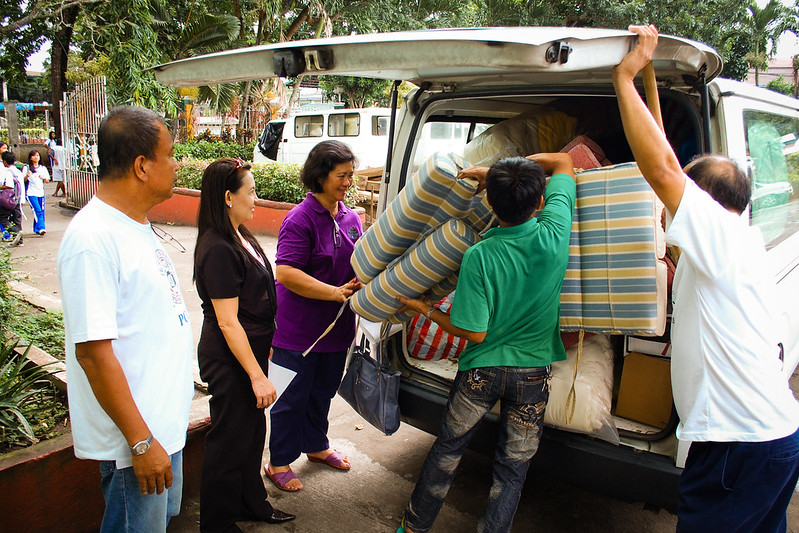
IRRI's Host Country and Community Relations Office has turned over donations from IRRI employees to the Municipal Disaster and Risk Reduction Coordinating Councils of the towns of Los Baños and Bay and continues to coordinate relief assistance and feeding programs from volunteer organizations. Donated items include rice, canned foods, hygiene articles, bottled water, blankets, towels, and clothes and will be distributed to those affected by recent flooding on the shores of Laguna Lake. Cash donations were used to buy more rice for distribution to the flood victims.
The HCCRO team thanks all donors and those who volunteered to help during the feeding programs.
Learn more about IRRI (www.irri.org) or follow us on the social media and networks (all links down the right column).
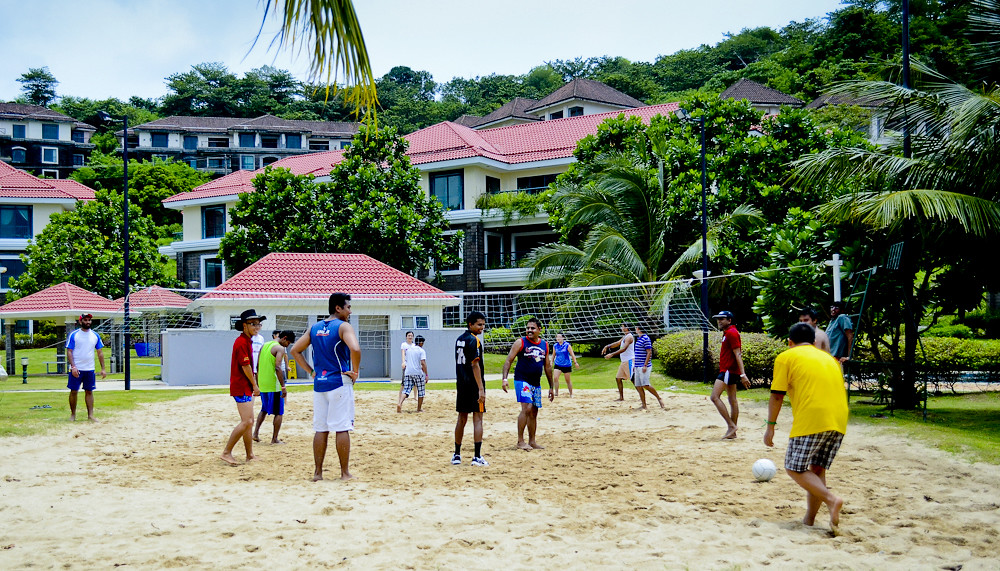
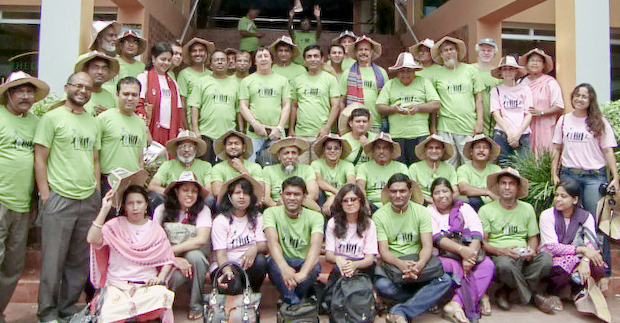
The Association of Fellows, Scholars, Trainees, and Residents of IRRI (AFSTRI) held a day-long sports festival at Canyon Cove Residential Beach Resort, Batangas, on 1 September 2012. Eighty members and their spouses and children the event, which was opened by messages from Govinda Rizal, AFSTRI president, and Zilhas Ahmed, AFSTRI sports officer.
There were six games and two optional activities (fun diving, kayaking) prepared for the participants, who divided themselves into four teams: Red, led by Kashif Shahid Aslam, visiting research fellow; Green, led by Zhuang Zhuo, Ph.D. research scholar; Yellow, led by Md. Rafiqul Islam, postdoctoral fellow; and Violet team led by Craig Jameson, Ph.D. research scholar. Grand prizes were chocolate and popcorn.
The grownups weren't the only ones in competition, as a sandcastle-building game was prepared for the kids.
Learn more about IRRI (www.irri.org) or follow us on the social media and networks (all links down the right column).
The Consortium for Unfavorable Rice Environments (CURE) joined farmers of Arakan in North Cotabato, a province in Southern Philippines, during the annual farmers' field day on 27 August 2012 organized by the University of Southern Mindanao (USM). The Municipality of Arakan, home of the aromatic upland rice variety dinorado, is the key site for CURE's upland rice workgroup, led by IRRI's Casiana Vera Cruz together with key site coordinator Edwin Hondrade of USM in Kabacan, Cotabato.
The field day was attended by 87 farmers from eight villages in Arakan and was co-organized by Dr. Hondrade with Rose Hondrade, also of USM.
The event, which coincided with the 21st founding anniversary of the municipality, kicked off with a walk-through of the experimental site where the observational nursery for upland traditional rice varieties, the National Cooperative Testing of new improved upland rice varieties, and the Formal and Informal Mother Trial plots are located.
“These plots supervised by USM also serve as a fallback for farmers who experience a poor or bad harvest,” Dr. Rose Hondrade said. “They can get good quality seed from here.”
Nestor Nombreda, president of the Arakan Community Seed Bank Organization (ACSBO), said that farmers get to earn extra if they manage their crop well. “We get requests for seeds when others see that our rice plants look good.”
The event also served as a mini seed fair, filled with games and prizes, in which farmers brought quality seed that they produced from the different varieties of upland rice and their favorite dinorado. Those who brought the most number of good quality seed were given IRRI shirts, caps, and Super Bags as prizes.
“We practice what we learned in the community seed bank training,” said Thelma Mallorca, one of the farmers who brought prize-winning seeds for display during the mini seed fair.
Seedlings and root crops were also given away to all farmers as part of the Pagkain Para sa Masa (Food for the Masses) Program of the Department of Agriculture.
“Pagkain Para sa Masa is a self-help household food security program for the upland and internally-displaced communities in Mindanao,” Dr. Edwin Hondrade explained. “We have taken this opportunity to distribute seedlings of various fruits and vegetables to our farmers to help augment their food supply and income.”
The event was attended by representatives from IRRI—Dr. Vera Cruz (CURE workgroup leader for the uplands), Elenor de Leon (communication and extension specialist), and Jessieca Narciso (IRRI videographer).
Learn more about IRRI (www.irri.org) or follow us on the social media and networks (all links down the right column).
The Bureau of Agricultural Research of the Philippine Department of Agriculture (DA-BAR) recently approved the project Developing Ecological Engineering Approaches to Restore and Conserve Ecosystem Services for Pest Management for Sustainable Rice Production in the Philippines, which it will implement over two years with IRRI in selected sites in Laguna and Regional Agricultural Research Centers in Iloilo and Cagayan de Oro provinces. The project, led by K.L. Heong, IRRI principal scientist, will apply ecological engineering (EE) concepts introduced by the ADB-IRRI Planthopper Project to enhance biodiversity and ecosystem services and reduce insecticide use. When EE practices are in place, rich biodiversity and related biological control ecosystem services are enhanced and vulnerability to planthopper outbreaks is markedly reduced.
EE practices, combined with government efforts to reducing unnecessary insecticide use, are now widespread in the Mekong Delta of Vietnam, which has endured pest outbreaks since 2008. (Visit the Ricehoppers blog for more information.)
Several training workshops will be held for Filipino researchers and pest management practitioners on the following topics: EE approaches in the development of sustainable pest management; basic principles of insect ecology and sampling methods; and arthropod taxonomy and identification. Opportunities to interact and learn from other EE practitioners in China, Thailand, and Vietnam will also be provided.
Learn more about IRRI (www.irri.org) or follow us on the social media and networks (all links down the right column).
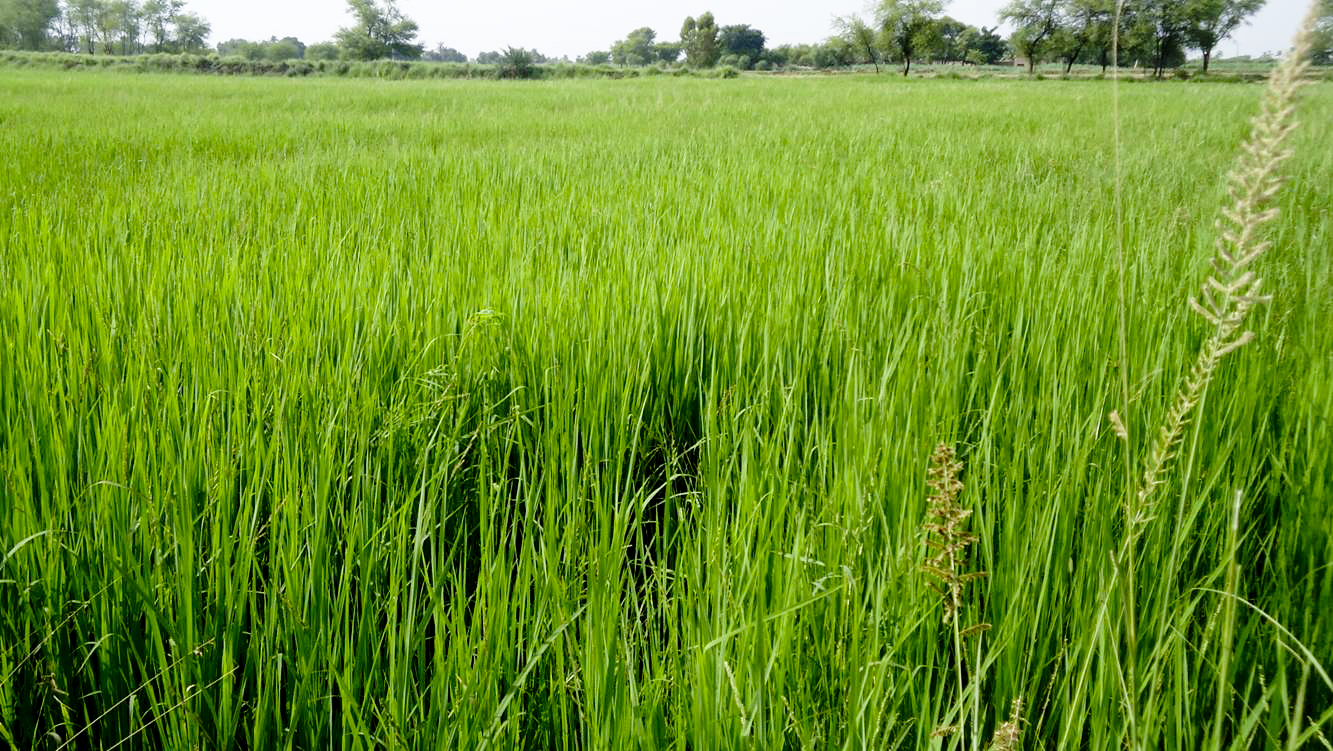
Cholistan Plantation, a privately owned company, is undertaking commercial agriculture in Bahawalpur in the southern Punjab. It has acquired a large area from the government for the purpose and is growing wheat, cotton, rice, and sugarcane. A 50-acre block is under rice, 9 acres of which are direct-seeded (DSR) through broadcast method. CSISA-Pakistan, providing assistance to the company, initially recommended 'zero-till' (DSR). Due to poor field leveling, however, reduced tillage approach was instead used. The field was leveled after irrigation and the crop was broadcast-sown.
The crop is growing well and is comparable to a nursery-planted crop. A few acres of DSR planted early in the season (early June) are outperforming the transplanted crop. This constitutes the first experience of Cholistan Plantation in a new endeavor, and its management is happy with the crop condition and the ease and reduced cost of crop production. It is now planning a field event in collaboration with CSISA-Pakistan.
Learn more about IRRI (www.irri.org) or follow us on the social media and networks (all links down the right column).
The Cereal Systems Initiative for South Asia (CSISA) in Bangladesh held its third planning meeting and annual retreat, attended by fifty-four CSISA employees and guests from India and Nepal. Presentations were made by CSISA leaders (Systematic change, by Christian Portal, chief of party; Large working group: Sector logics, by Josh Bryant, monitoring and evaluation leader, and his team; and a discussion led by M.A. Salaque, CSISA-IRRI coordinator), after which further discussion with participants were held.
The meeting and retreat, held at Nazimgarh Resort in Sylhet on 27-30 August 2012, also included activities for relaxation, entertainment, and interaction among the participants, such as a river cruise in Lala Khal on shallow speed boats, to nurture team spirit.
Learn more about IRRI (www.irri.org) or follow us on the social media and networks (all links down the right column).
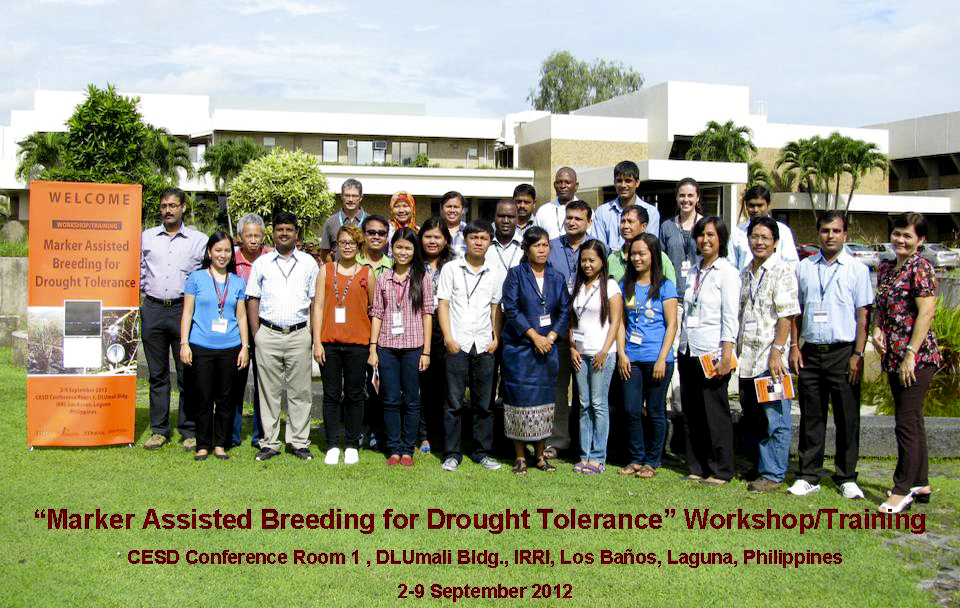
A workshop and training on marker-assisted breeding for drought tolerance is ongoing (2-9 September 2012) at IRRI Headquarters. The training includes lectures and hands-on sessions on the identification of large-effect QTLs for grain yield under drought, physiological characterization of large-effect QTLs, standardized drought phenotyping in the field, and marker-assisted introgression of large-effect QTLs to improve grain yield under drought.
Eleven participants from India, Africa, Laos, and the Philippines (PhilRice) are attending.
The workshop-training is hosted by IRRI's Crop and Environmental Sciences and Plant Breeding, Genetics, and Biotechnology divisions and was organized by Amelia Henry, Shalab Dixit, and Arvind Kumar.
Learn more about IRRI (www.irri.org) or follow us on the social media and networks (all links down the right column).